In grade 12 on lifesciences we learnt about the development of foetus. In the ovary a matured Graafian folicles burst (usually on day 14 of the menstrual cycle) and releases an egg cell. This process is called ovulation. Fertilisation takes place high up in the fallopian tube. The egg cell (containing 23 chromosomes) and sperm cell (containing 23 chromosomes)fuse to form a zygote (containing 46 chromosomes).The zygote divides by mitosis to form an embryo (a ball of cells) as it moves down the fallopian tube. It takes about 5 to 7 days for the embryo to reach the uterus. In the uterus the embryo settles on endometrium and sinks into it, embedding itself in the endometrium. This process is called implantation. After implantation, the embryo produces many finger-like structures called villi from the outer membrane of the embryo which is known as the chorion. The villi grow into the tissue of the uterus to form a placenta. The placenta is attached to the embryo by the umbilical cord. The embryo is enclosed in a fluid-filled sac called the amnion. The fluid is called the amniotic fluid. After about 8 weeks, the embryo develops structures such as limbs and all the organs of the body. Now it is called a foetus. Do you agree with the above information about the development of the foetus?support your answer with the relevant points. Do not only agree or disagree, make sure you support your answer.
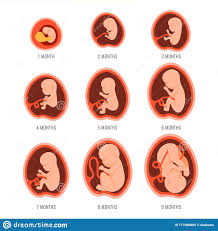
DEVELOPMENT OF FOETUS
 Site Title
20 responses to “223080829-Maqhashu Vela Development of foetus”
Yes I do agree. I would also like to add that there is a placenta that protects the foetus from diseases. The umbilical cord that connects the foetus to the mother and allows food to pass through.
LikeLiked by 1 person
Wow that’s the important information and this umblical cord if you still remember has it’s vessels that is umblical vein and umblical arteries
LikeLiked by 1 person
223191949 Sikholiwe jikile
I’m agree with the above information of how foetus develop because the ovary is one of the two organs in female reproductive system and it is where the females eggs are produced.After ovulation if the egg is fertilized by sperm, it travels to the uterus where it implants and develop into the foetus.
LikeLiked by 1 person
Yeah that’s true and It not just travels to uterus immediately after it being fertilized it firstly divides in the fallopian tube into cells
LikeLiked by 1 person
222711701-Myengo owethu
Indeed sir i agree with you because thé ovary is oné of two organs in female reproductive systèm and it is where females egg are produced and also the egg fertilized by sperm.
LikeLiked by 1 person
My teacher told us that eggs are produced in the ovary but not fertilized in ovary. Said that the site of fertilization is on fallopian tube
LikeLiked by 1 person
222521392 Dushu Zukile
yes I do agree with the above information as I understand the development of fetus that it begins at fertilization, where the sperm and egg join to form a single cell known as a zygote. And at last it is therefore important for a mother to take care of herself during pregnancy to ensure the healthy development of her own unborn child.
LikeLiked by 1 person
Yeah it’s true that it starts on fertilisation process, so without fertilisation there’s no formation of the foetus
LikeLiked by 1 person
I agree because for the zygote to have full sets of chromosomes it must receive 23 chromosomes from the maternal side and the other 23 from the paternal. The zygote undergoes the process from zygote to morula then blastocyte to embryo then it becomes the foetus.
LikeLiked by 1 person
Yeah when these 23 from paternal and 23 from maternal side formed this full sets of chromosomes that’s the fertilisation process which is other processes of forming the foetus
LikeLiked by 1 person
230006477 Qekelana Lunga
According to my assumptions I can say I totally agree with you with the above information about the development of the foetus because development of foetus are: The egg cell (containing 23 chromosomes) and sperm cell (containing 23 chromosomes)fuse to a zygote (containing 46 chromosomes). and The villi grow into the tissue of the uterus to form a placenta.
LikeLiked by 1 person
223080829-Maqhashu Vela
But these sperm cell and egg cell do not fuse to a zygote, our teacher told us they fuse to form a zygote.
LikeLike
230006477 Qekelana Lunga
According to my assumptions I can say I totally agree with you with the above information about the development of the foetus because development of foetus are: The egg cell (containing 23 chromosomes) and sperm cell (containing 23 chromosomes)fuse to a zygote (containing 46 chromosomes). and The villi grow into the tissue of the uterus to form a placenta.
LikeLiked by 1 person
223080829- Maqhashu Vela
Yeah that’s true these villi is these finger like projections that I mentioned which grow to form placenta for allowing the connection to mother and an embryo in the uterus
LikeLiked by 1 person
Indeed I agree with the above information I would to add that even though placenta connect Festus and the mother but it also prevent mother blood from mixing with blood of the feotus
LikeLiked by 1 person
223080829-Maqhashu Vela
Good that’s true, it’s another function of the placenta in the development of the foetus
LikeLiked by 1 person
It was a quite fun lesson from grade 12 ” life cycle of a human” I wish I could continue study further about the process I mean to witness the practical side of it.”
LikeLiked by 1 person
Yeah that was an interesting topic and we also didn’t done the practical side of it but atleast we know how it works.
LikeLike
I agree that on day 14 of the menstrual cycle the mature graafian follicle ruptures then release an egg cell on the ovulation process.
LikeLiked by 1 person
223080829, Maqhashu Vela yeah that is true that the graafian follicle ruptured then releases an egg cell but what I can say is that not always ovulation occur on day 14. Sometimes ovulation can happen but an egg not being fertilized in the cycle so the formation of the foetus starts to happen when the egg cell is fertilised.
LikeLiked by 2 people